by Amanda G. Brandt
My first reaction when I read that the Louvre was embarking on renovations that would allow the Mona Lisa her own room was to roll my eyes. Hard. My next was to shake my head and snort a little. How funny, I thought. The Mona Lisa is getting a room of her own. I wonder what Virginia Woolf would have to say about that.
My only visit to Leonardo da Vinci’s Mona Lisa was more than 25 years ago. I was spending a college semester living in Paris and interning at the International Herald Tribune, stumbling into adulthood with equal parts optimism and fear. With the help of a student ID I was able to visit the Louvre for free once a week, and so I did, making it a point to see every last art piece on display in the fall of 2000. I worked my way through all the galleries, bought overpriced pastries and magnets, took photos, and knew that even after technically seeing everything I was only barely scratching the surface of what was there. Of what it meant for it all to be there. Of what it meant for each piece to have been created and collected in this one place for me to see as a 20-year-old student hungry for knowledge and experience.
It was crowded in the Salle des États, with dozens of tourists flashing photos of one painting, turning their backs to all the rest. The Mona Lisa had been moved to this room—the museum’s largest—decades earlier to accommodate her crowds. I had been looking forward to meeting her, perhaps spending some time with her and reflecting on her importance and popularity, my notebook and camera ready. But the throngs were constant, flashes of light and movement in all directions. And she was small, unassuming. I wasn’t impressed. Other masterpieces in the museum filled me with awe and reverence, but this one was reduced to a photo op, cheapened by its crowds.
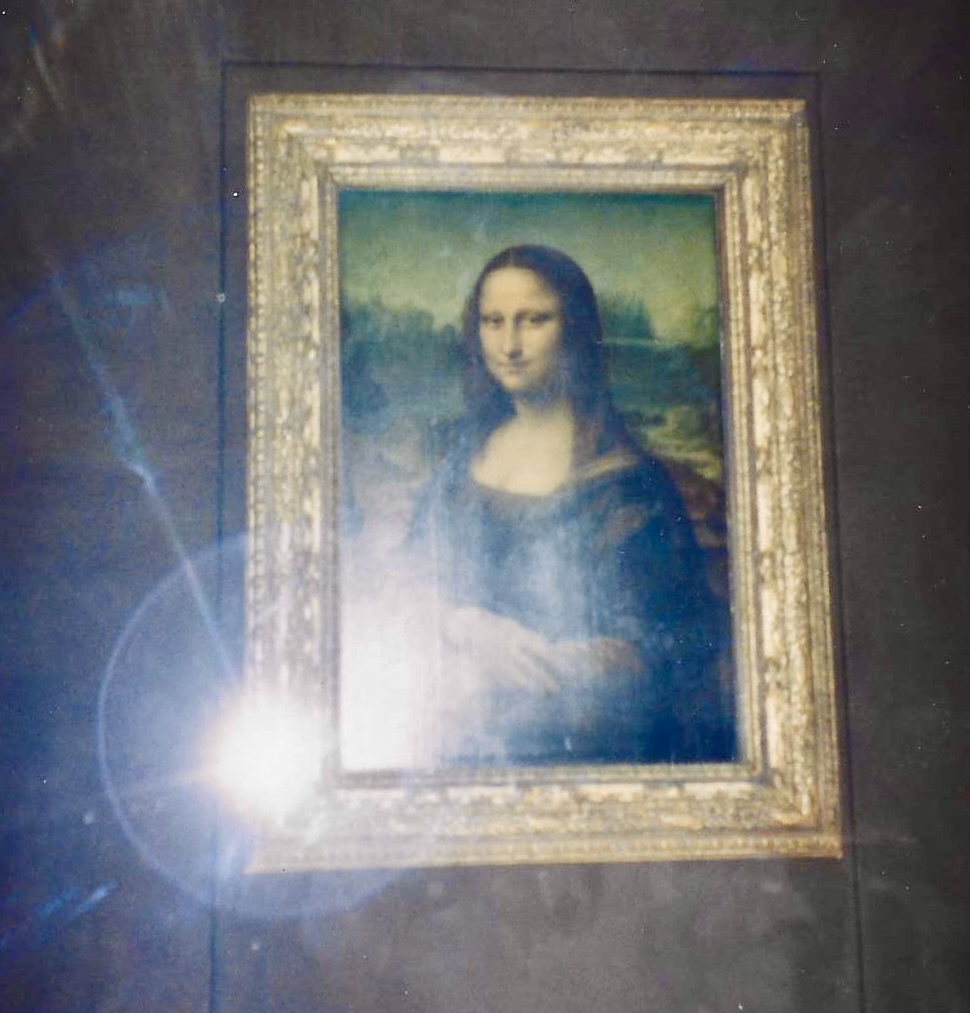
Intellectually, I understand why the Louvre, overdue for some renovations, would plan to give the Mona Lisa her own space. According to some news outlets, she will even have her own entrance, so visitors can come to see just her without accidentally seeing other works of art. It makes sense, right? Give the people what they want? Streamline the process?
***
I met the Mona Lisa only two years after meeting Virginia Woolf, a literary pillar of my nascent adulthood. Woolf’s book-length essay A Room of One’s Own is based on a series of lectures she gave to women about writing fiction. From her perspective, for a woman to be a successful writer she must have a certain amount of money and a room of her own in which to work—preferably one with a lock. My copy of the book, which I remembered as a bit long-winded, with too much speculation (not my favorite of Woolf’s work), was purchased from my college bookstore for a course on the Bloomsbury Group. The worn yellow sticker on the spine tells me that I bought my copy used. The notes inside tell me that I was an 18-year-old jaded by the injustices of the world and optimistic about how I and my generation of thinkers and doers might change things.
As a college freshman, my scholarly limitations meant that I did not recognize all the landmarks and characters Woolf introduces, so some context was certainly lost. Notes in dark blue pen—playing with handwriting that capitalized all my Rs—indicate that I did, at least a few times, research some of those references, but not many. Instead, I took only what felt pertinent to me: the yawning gap between Woolf’s time and my own. Faded pencil marks on pale yellow Post-its, underlining and marginalia throughout. Most notes betraying my angst and self-involvement. An assertion that “these stories are not mine” followed by rumination on how I might take charge of my own life.
***
Two years after making these notes, I was studying abroad and building a truer foundation for who I would become. I thought that seeing artistic masterpieces would be instrumental in helping me understand the world and my place in it. In the Salle des États, all I found was misdirected idolatry. Of all the pieces in the museum, or even all the paintings or all the da Vincis, why this one? Just because of its popularity? How can a piece of art—regardless of its personal or cultural value—really be appreciated in this environment?
Hence the eye roll when I learned that Mona Lisa—a painting on a 21-by-30-inch piece of wood—would soon be displayed, alone, in a 33,000-square-foot room.
But maybe I was missing something, slipping into my 20-year-old self when my 46-year-old self could see the situation from a wider lens. Perhaps, I thought, moving Mona Lisa to her own space was actually progress. Aside from crowd control and simplifying viewing for devotees, perhaps there was more going on here. Perhaps this was giving a woman who is always under scrutiny, and from whom much is asked, a room of her own in which to do her important work. The respect she deserves.
So I re-read Woolf’s essay.
Writing in 1928 in England, Woolf speculated that “in a hundred years…women will have ceased to be the protected sex. Logically they will take part in all the activities and exertions that were once denied them.” As I write in 2026 in the United States, this speculation gives me pause. While it’s true that many more opportunities are open to women now, cultural and political shifts in recent years mean that I feel more restricted as a woman than I did when I was 20. I sense that my rights now are less assured, holding on by old twine, disintegrating with the strain of every new law and court case restricting women’s autonomy over their own bodies and their lives.
Woolf says that given another hundred years women writers will have honed their skills and broken into more literary fields. That if they are allowed the space and finances to be writers, they will succeed, and literature as a whole will be better for it. Are we there yet? Some individuals are there, sure, but are they the exception or the rule? What must a modern American woman, one ocean and almost one hundred years away, sacrifice to be a writer? And once she makes those sacrifices, what else does she lose as collateral damage? What are the unintentional sacrifices that did not at first appear to be part of the agreement?
Woolf muses on the responsibilities and expectations of women, much of what we now refer to as the mental load. On how being the default manager of home, family, and work environments leads to breaks in concentration that can never fully be mended, that will always show scars of the lost trains of thought.
I have, in theory, a room of my own. The extra bedroom in my house, called the office, in which the desk is piled with old mail, scribbled notes on loose paper, dull pencils, dog-eared books with pens lodged in as extra bookmarks, and thick films of dust around the various notebooks and ephemera; the bookshelves are cluttered with tomes on pedagogy and writing craft; and the rarely-used twin bed sports a quilt of books and magazines kept from the shelves because I want to read them soon. Except that there are dozens of them and only one of me and only so many hours of the day and already so much else I have to do.
I can walk with purpose past the clutter, focused on the writerly work ahead. But how long will I have in my literary revelry until some responsibility floats to the surface of my thoughts, distracting me from my work? Some caretaking or appointment reminder. Some interminable to-do list of default responsibilities inherent to standard adulthood or parenthood.
Still, I revel in the access, in being allowed in spaces that once prohibited women. In being allowed to be a writer, among other things, and to do so out in the open rather than anonymously.
Is giving Mona Lisa a room of her own an indication that yes, we have moved forward in the past 100 years, better appreciating women in art? Is she proof of the power of women? Are we honoring the woman in the painting, the one with the beguiling smile? Or are we honoring the man who painted her? Or just the cachet of a well-known chef-d’œuvre?
I’m inclined, now, to see Mona Lisa as a woman, shuffled through the centuries on the whims of others. She is, of course, the depiction of a real woman: Lisa del Giocondo. So will a vast room and protective glass give her the space and attention she deserves, or will they further isolate her from the context in which she was created? And by taking her out of context, what of her story is lost to her visitors, the ones who might not stay to see the other masterpieces of visual art?
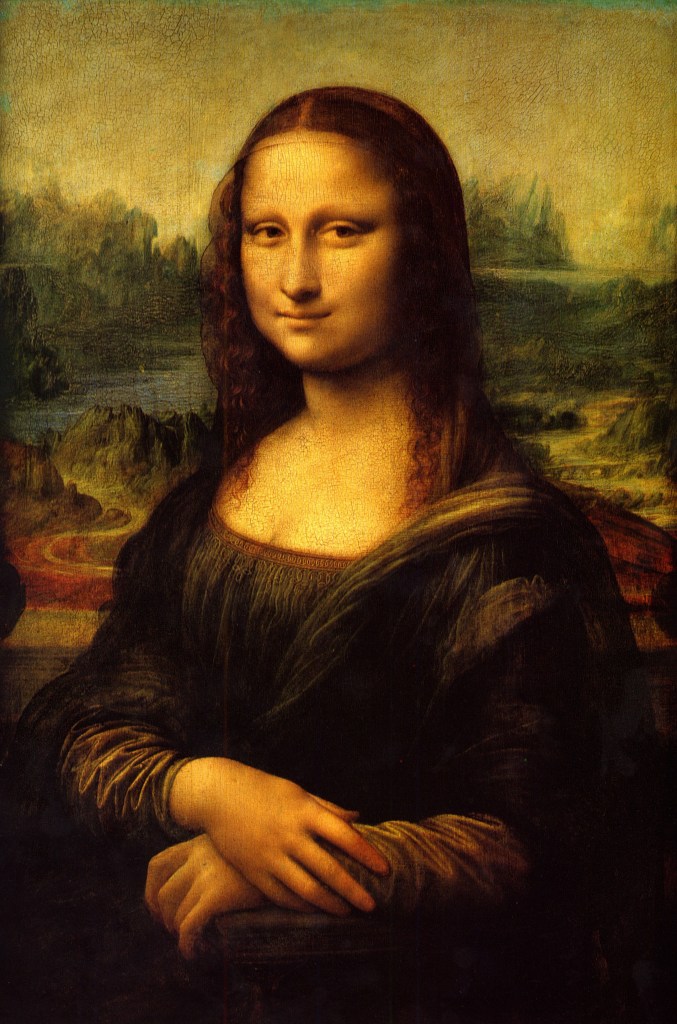
Woolf said, “I thought how unpleasant it is to be locked out; and I thought how it is worse perhaps to be locked in.” So we are all, perhaps, a little bit stuck. Pulled between locking ourselves in and leaving to explore. My hope is that visitors to Lisa’s portrait in its new room will see something there that I was unable to see, and that the experience will open them up to ideas and reflections they never would have had otherwise. Viewers can choose to linger in this room of her own, or choose to move out into the wider world of both art and life.
Amanda G. Brandt is a Massachusetts-based writer, editor, and educator. Having spent most of her career in educational publishing, she now teaches writing, prioritizing curiosity and connection. Amanda’s work has been published in both literary and news magazines. She is currently working on a collection of essays about anxiety.

