Welcome to After the Art’s twenty-second issue.
We hope you enjoy these three essays:
“Beautiful Thinking” by Lucille Lorenz
“L’Origine” by Linda Lappin
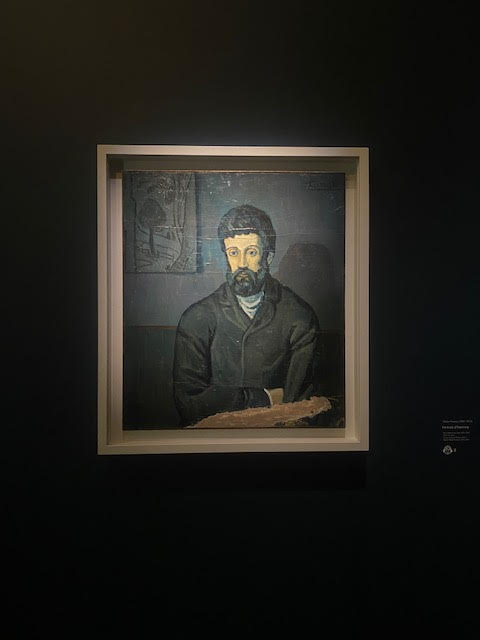
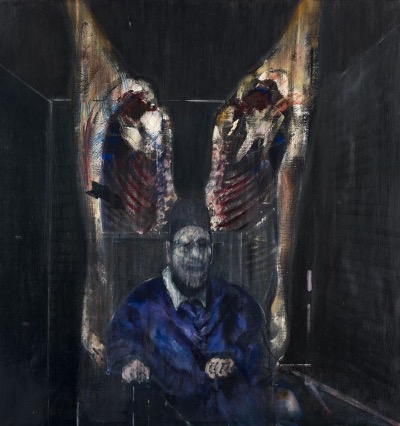
“Violent, Dark Revolts of Being” by Wes Jamison
Welcome to After the Art’s twenty-second issue.
We hope you enjoy these three essays:
“Beautiful Thinking” by Lucille Lorenz
“L’Origine” by Linda Lappin
“Violent, Dark Revolts of Being” by Wes Jamison
by Lucille Lorenz
What does it mean to be able to think beautifully? What does it mean to not be able to live?
I discovered Hemingway for the first time when I was 16. It was during one of the worst periods of my life. Continue reading “Beautiful Thinking”
by Linda Lappin
The Musée d’Orsay is packed as usual over the holidays, with visitors swarming in and out of rooms displaying the spellbinding animal portraits of Rosa Bonheur, the nineteenth century artist who captured the wild gaze of beasts and deflected them to the viewer. My goal today, instead, is a little red room on the ground floor, Salle 6, which holds one of the most notorious if rarely viewed paintings in the world: L’Origine du monde, by Gustave Courbet, created in 1866. Continue reading “L’Origine”
by Wes Jamison
Portraiture used to be mimetic, representative of the actual human stuff sitting before the painter. The belief was that a person’s essence, their subject, the spirit correlated directly to the uniqueness of their face. We believed in physiognomy and phrenology: Chaucer’s Summoner’s narrow eyes, black scabby brows, and whelks of knobby white or Whitman’s animal will and large philoprogenetiveness and size. Continue reading “Violent, Dark Revolts of Being”
Welcome to After the Art’s twenty-first issue.
We hope you enjoy these four essays:
“Dogs of Arizona, Snakes of Isidore” by Caitlin Horrocks
“The Weeping Women” by Esther Fishman
“Enigma in the Sun” by Kimmo Rosenthal
“Entrepot” by Paul Smith
Continue reading “After the Art – Issue 21 – September 2023”
by Caitlin Horrocks
Fifteen years ago, I wandered in to the first American exhibition of paintings by artist Oscar Oiwa. I used to walk periodically through the Arizona State University Art Museum in much the same way I liked to walk through the life sciences building with terrariums embedded in the walls showcasing native snake species: I was a graduate student in writing, and hungry for visual input of any kind that was not a computer screen or a printed page, the inside of a classroom, or the endless taupe streetscapes of Phoenix and Tempe. Continue reading “Dogs of Arizona, Snakes of Isidore”
by Esther Fishman
There they stand, on the top of Bernard Maybeck’s Palace of Fine Arts in San Francisco. Some face out to sea, some would look toward the interior of the building, if they were blessed with faces and the ability to see. They are usually called The Weeping Women. Continue reading “The Weeping Women”
by Kimmo Rosenthal
The Australian author Gerald Murnane has a fascinating description of reading: “The truth of … reading is … the self-evident fact that there is no reader nor subject-matter, only images and feelings in a sort of eternity.” Continue reading “Enigma in the Sun”
by Paul Smith
When I heard there was an exhibit of Vivian Maier’s color photos at the Chicago Historical Museum, I went to see what she had captured on film. Continue reading “Entrepot”
Welcome to After the Art’s twentieth issue.
We hope you enjoy these four essays:
“All That is Light and Air” by Cheryl Sadowski
“Venetian Red and other Fates” by Dian Parker
“The Langlois Bridge at Arles: Love, Life, and Death in the South of France” by Ashley Elizabeth Trotter
“Wild Birds and the Primacy of Place” by Jesse Curran
We’ve also started a Facebook page, which you can follow for posts about future issues as well as exhibits, articles, books, essays, and sites that might be of interest. Continue reading “After the Art – Issue 20 – June 2023”